Bache, bene venies
gratus et optatus
per quem noster animus
fit letificatus.
Istud vinum, bonum vinum,
vinum generosum,
reddit virum curialem,
probum, animosum.
Bachus forte superans
pectora virorum
in amorem concitat
animos eorum.
Bachus venas penetrans
calido liquore
facit eas igneas
Veneris ardore.
Bachus lenius leniens
curas et dolores
confert iocum, gaudia,
risus et amores.
Bachus mentem femine
solet hic lenire
cogit eam cirius
viro consentire.
Bachus numen faciens
hominem iocundum
reddit eum pariter
doctum et facundum.
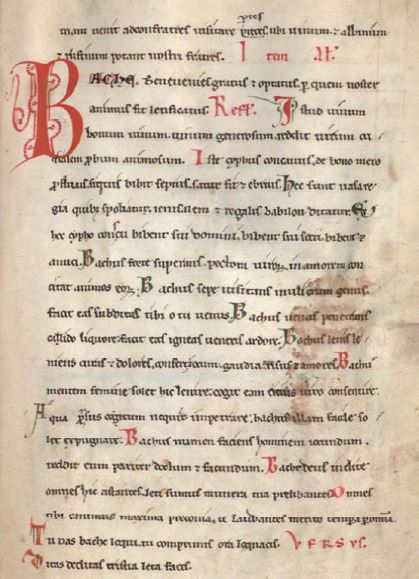
Source: 11-12th century manuscript: Carmina Burana, which is thought to be written by students.
Diemer, Peter and Dorothee. “Die Carmina Burana” in: Carmina Burana. Text und Übersetzung, Benedikt Konrad Vollmann (ed.), Deutscher Klassiker Verlag, Frankfurt am Main 1987. Image of the Bacche bene venies page of the Carmina Buranaa from: About this Collection | World Digital Library | Digital Collections | Library of Congress
English translation:
Welcome, Bacchus, pleasing and desired, through whom our spirits are made joyful.
This wine, good wine, kindly wine, makes a man noble, honest, spirited.
Bacchus perhaps conquering the hearts of men stirs to love their spirits.
Bacchus entering their veins with hot liquor sets them afire with the heat of Venus.
Gentle Bacchus soothes cares and sorrows brings jolly, joys, laughter and love.
Bacchus a woman’s mind is wont to soothe and drive her more quickly to consent with a man.
Bacchus, a god, makes a man happy and makes him equally learned and eloquent.