Dendrochronology and wood analyses
Identification of the tree species found at an archaeological site can give valuable information on resource utilisation, trade and climate. It is also essential if the wood is to be carbon dated. Wood macrofossils can also be vital in identifying the presence of trees when pollen production has been limited by environmental stress, including climatic conditions.
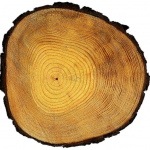
6000 year old oak, Thorne moor,UKDendrochronology is fundamental in the calibration of radiocarbon dates. A chronology is built via a principle called crossdating. When working with living trees of the same species you can match the ring-width variations between them to establish a tree-ring chronology and assign dates to the rings. This then continues with other older specimens and you continously work yourself back in time, building on the chronology. Swedish tree-ring chronologies are based mainly on oak, beech, pine, and spruce, but in some cases other species are included.
Dendrochronology sees frequent use in building related investigations, where the aim is to establish a chronology for the building and possible events such as renovations and expansions. In environmental application of dendrochronology tree-ring sequences are used to reconstruct environmental variables, such as temperature, precipitation, fire frequency, insect infestation, and more.