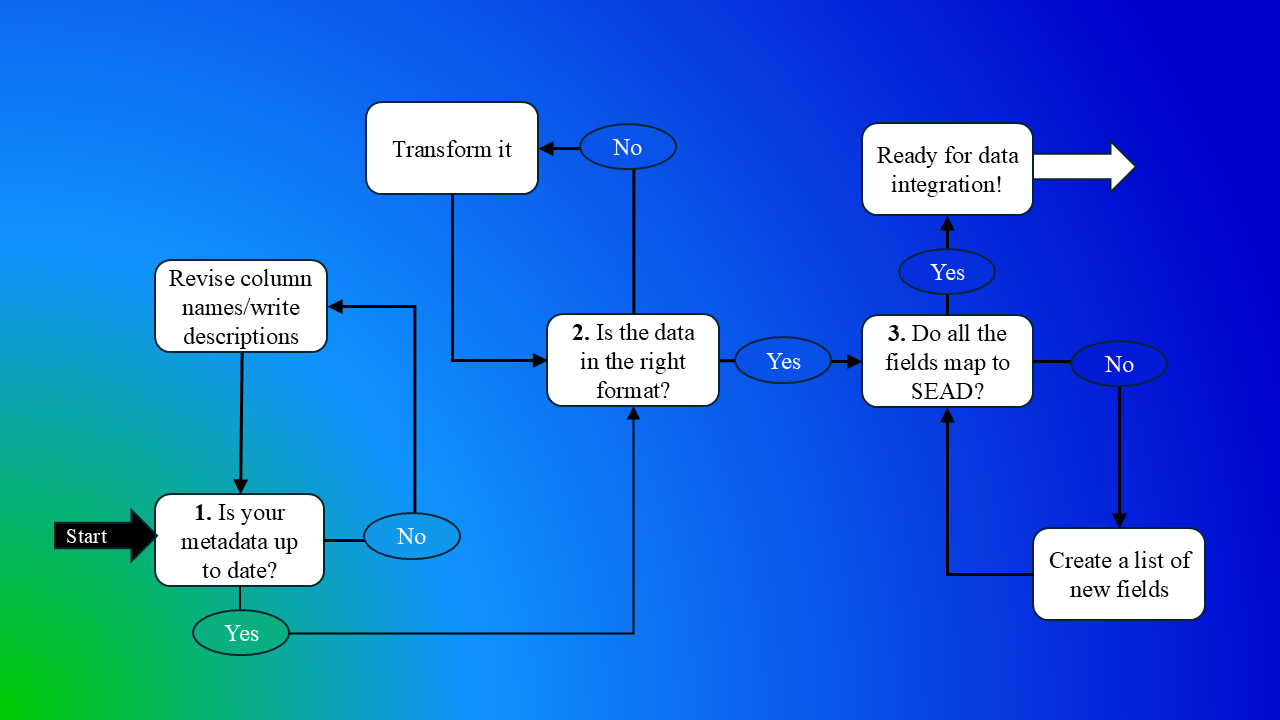
Thank you for your interest in sharing your data with the Strategic Environmental Archaeology Database (SEAD). Our data-mapping team is here to help make this process as easy as possible. Therefore we have developed a three-step approach to data importation
1. Check your metadata
The first step in data mapping is to check that your project metadata information is up to date and accurate. Metadata refers to the information about your data. Do you use standard column names for your data? Do you remember what they mean? Will the column names make sense to others? Do you know what units apply to recorded values?
2. Quality Control
Double check the data itself for typos, missing information, and data entry errors. Is there any data that landed in the wrong column? Do you have text where there should be a number? Did you record everything needed to uniquely identify and locate each site, context or sample?
3. Mapping
Work with SEAD’s data-mapping team to determine which SEAD tables and columns correspond to your data. See our list of Data categories and templates to make this easier.
In the unlikely event that your dataset contains an information type that is not yet present in the database we will work with you to design any new SEAD tables needed to correspond with that portion of your data.