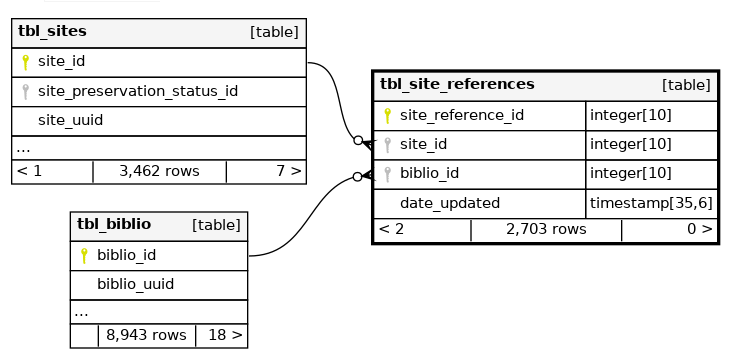
This join assigns each sample number to a sample group of one item.
(SEAD is set up to deal with proxy information from data sets from a single excavation. Proxies are often small items like insects and pollen. Therefore, the level of “sample_group” was set up for things like a single scoop of soil, which is later investigated to count the number of grains of pollen, or number of insects, etc. As a result, in SEAD it is the sample_group that is tied to a specific site, and all physical samples are associated with a sample group. For studies like this one, that draw from many different sites, with a focus on dates obtained from one particular species of bones, no information remains in the dataset to determine if the bones had once been part of a sample group when they were collected Therefore it is easiest to simply assign a unique sample_group_id to each sample).
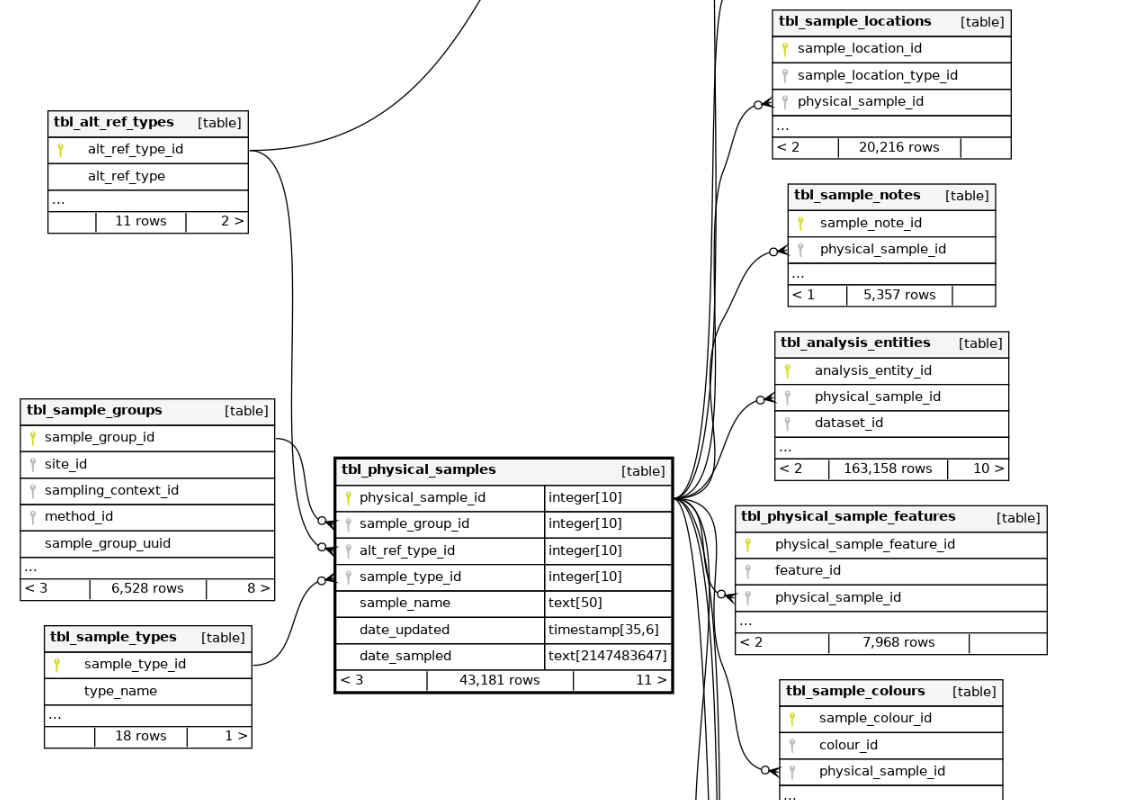
Since this is fixed values, I just created these extra columns, using an internal to this dataset holding value of 1 for the genus_id:
| New Column Name | Source Column |
|---|---|
| species | groenlandicus |
| genus_id | 1 |
The fixed value genus_id is necessary because a species name has an associated genus name that precedes it (The harp seal is formally called Pagophilus groenlandicus)
Therefore, this key is used to associate the species with the genus.
YAML
as of 2026-03-23:
  name: taxa_tree_master
type: fixed
public_id: taxon_id
keys: []
columns:
  - system_id
  - taxon_id
  - species
  - common_name
  - taxon_common_name_id
values:
  - - 1
    - null
    - null
    - null
    - null
- create a data-derived entity and pull in columns for element, biological age, and lab_nr
- add extra columns:
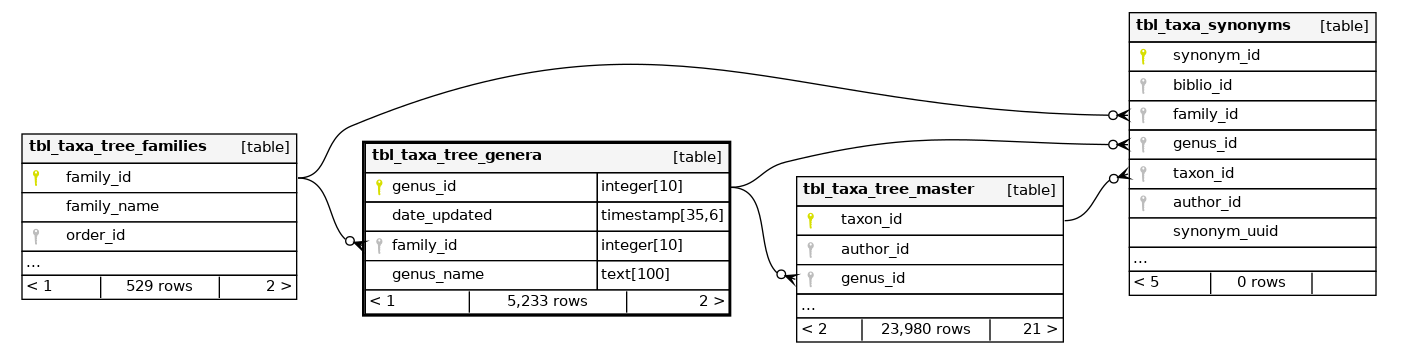
Starting from the assumption that there is one bone for each sample, and the information from the associated paper that all bones in this dataset are from harp seals: I add extra columns, using the internal-to-this-dataset holding value of 1 fortaxon_idthat will. in conjunction to the other entities that usetaxon_id, add the information that all bones in this dataset are harp seals:
| New Column Name | Source Column |
|---|---|
| abundance | 1 |
| taxon_id | 1 |
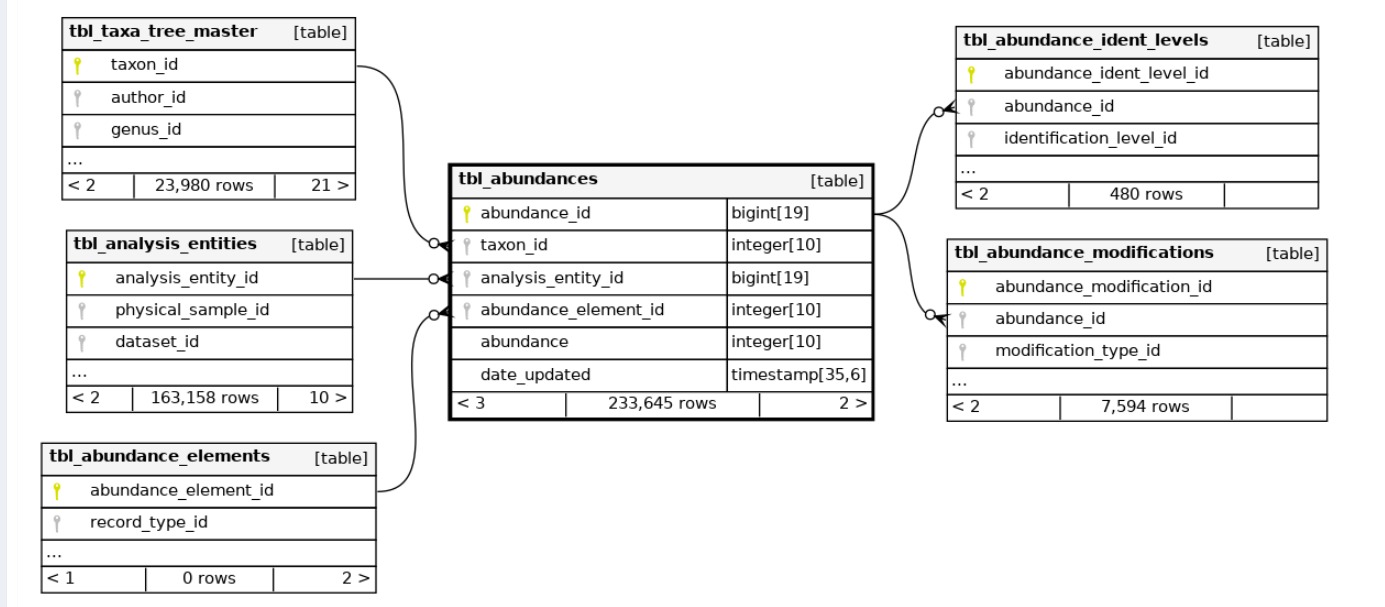
- add join to the Example dataset mapping/AFL Radiocarbon Data mapping/Entity abundance_element on the element to fills the abundance_element_id column of this entity with the appropriate numbers for each bone from the system_id row of the Example dataset mapping/AFL Radiocarbon Data mapping/Entity abundance_element sheet. (errors for this on 2026-04-22, message sent to Roger)
- create a second join to link the various taxa information to the abundances (waiting for the first join’s errors to be solved before attempting this)
- remove the entity for dating material, it isn’t actually needed for this dataset
specifies the sort of bone analysed
This entity corresponds to the B. Element column in the Radiocarbon data source data file, which lists which sort of bone underwent Radiocarbon dating, and to the K. Bone column of the Carbon data spreadsheet
There are 12 types of bones in the raidocarbon data set. Use the Drop Duplicates, and Drop Empty Rows options to create this list:
| system_id | Element |
|---|---|
| 1 | Phalanx |
| 2 | Femur |
| 3 | Temporal |
| 4 | Mandibula |
| 5 | nd |
| 6 | Humerus |
| 7 | Scapula |
| 8 | Fibula |
| 9 | Vertebra |
| 10 | Occipitale |
| 11 | Cranium |
| 12 | Radius |
YAML
name: abundance_element
type: entity
system_id: system_id
keys: []
columns:
  - element
  - lab_nr
public_id: abundance_element_id
source: datasheet
drop_duplicates:
  - element
check_functional_dependency: false
drop_empty_rows:
  - element
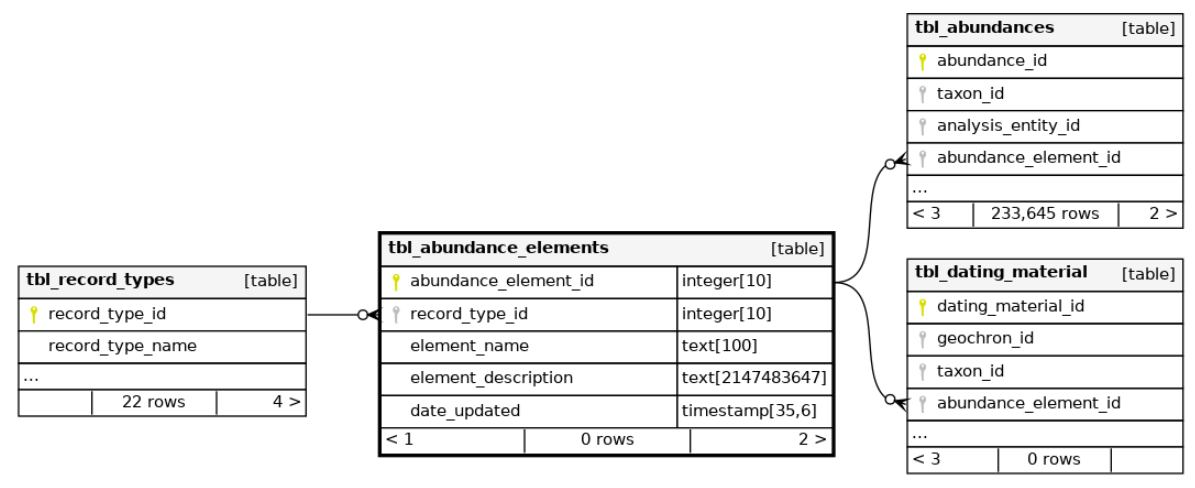
SEAD requires all physical samples to be part of a sample group, even if there is only one sample in the group, as it is the sample group that has the connection to a site.
Therefore this layer is added, as an intermediary layer between the Example dataset mapping/AFL Radiocarbon Data mapping/Entity physical_samples and Example dataset mapping/AFL Radiocarbon Data mapping/Entity site
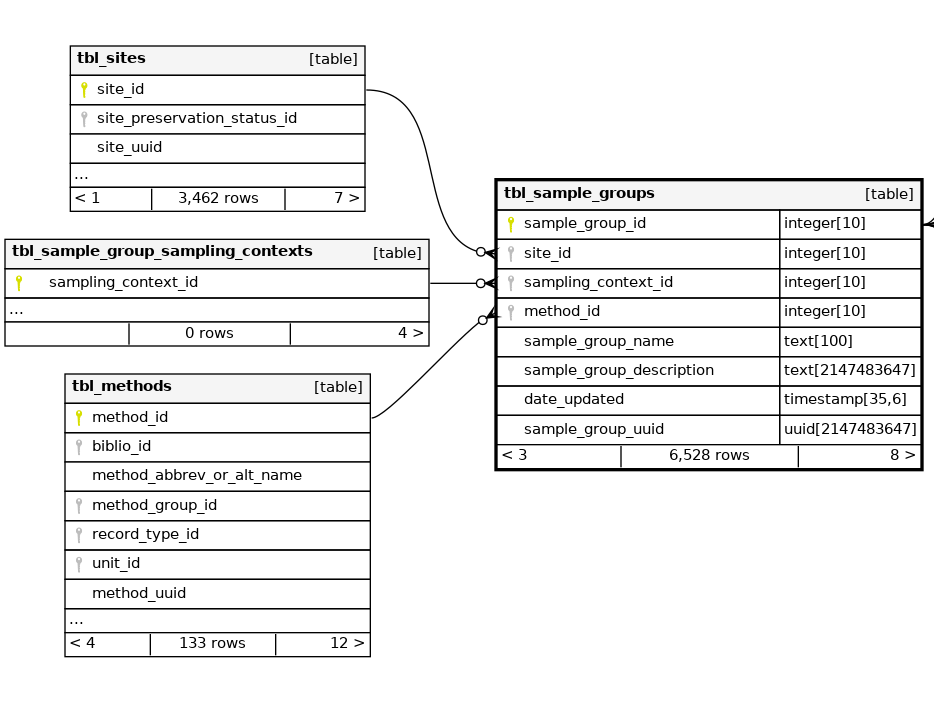
Since I had already compiled the location information into the locations sheet of the radiocarbon_Glykou_etal_2021_input.xlsx this entity accesses that sheet and imports the columns. In addition the entity is linked to the location_type entity through their common locaiton_type_id columns.
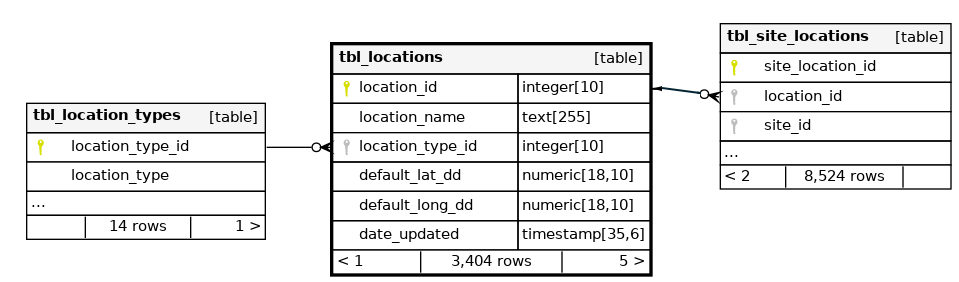
This query calls up the full list of all of SEAD’s location types (there are 14 of them) so that the location_type_id will be available to be joined to the location entity

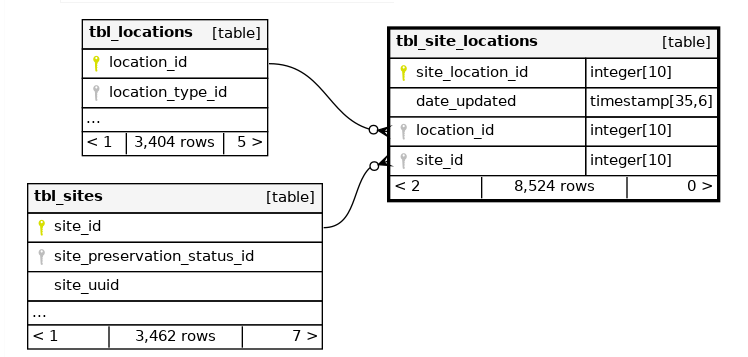
This table may not be needed, as it might all fit under the geochronology table?
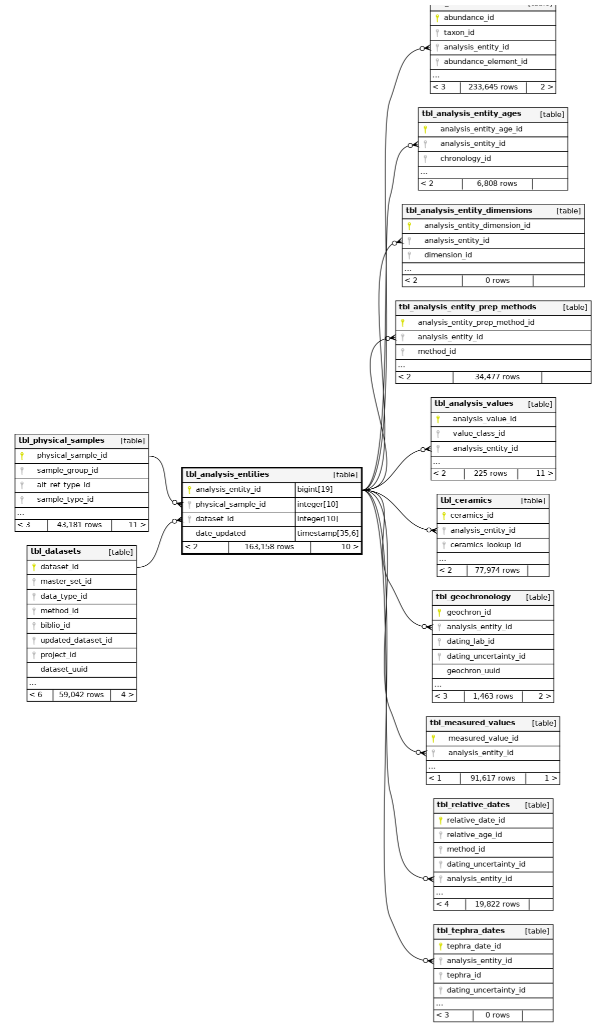
the table in which the various results are collected
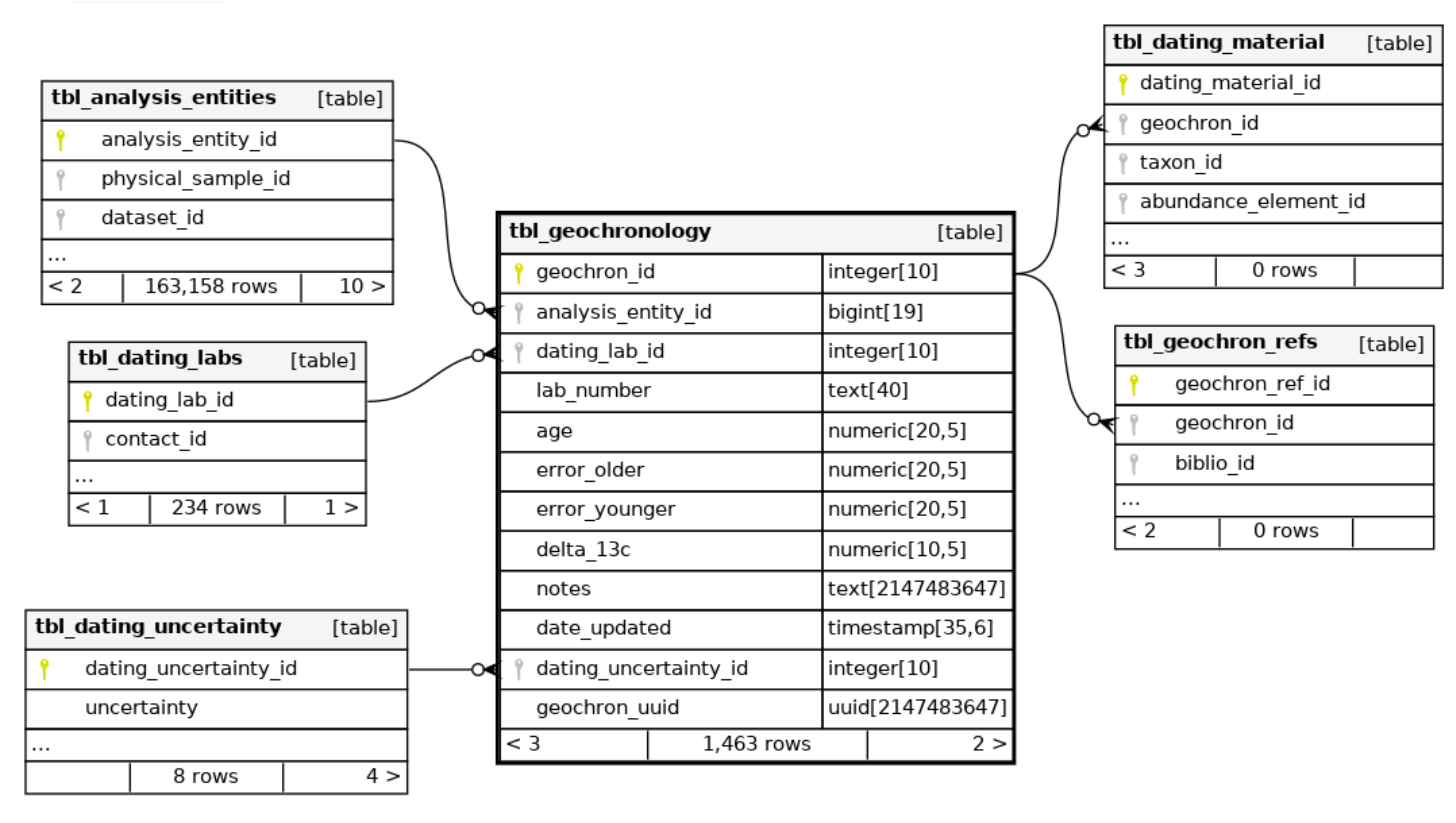
For the Radiocarbon sheet these are:
- F. BP this corresponds to age
- G. ± this corresponds to both error_older and error_younger
- H. δ13C this corresponds to delta_13c
- I. R(t) I am not certain if this already has a SEAD equivalent
- J. ± This is also a description of error, but this time of the R(t) value
- K. from 1σ
- L. to 1σ
- M.from 2σ
- N.to 2σ
Since I had already compiled the bibliographic information into the biblio sheet of the radiocarbon_Glykou_etal_2021_input.xlsx this entity simply accesses that sheet and imports the columns.